
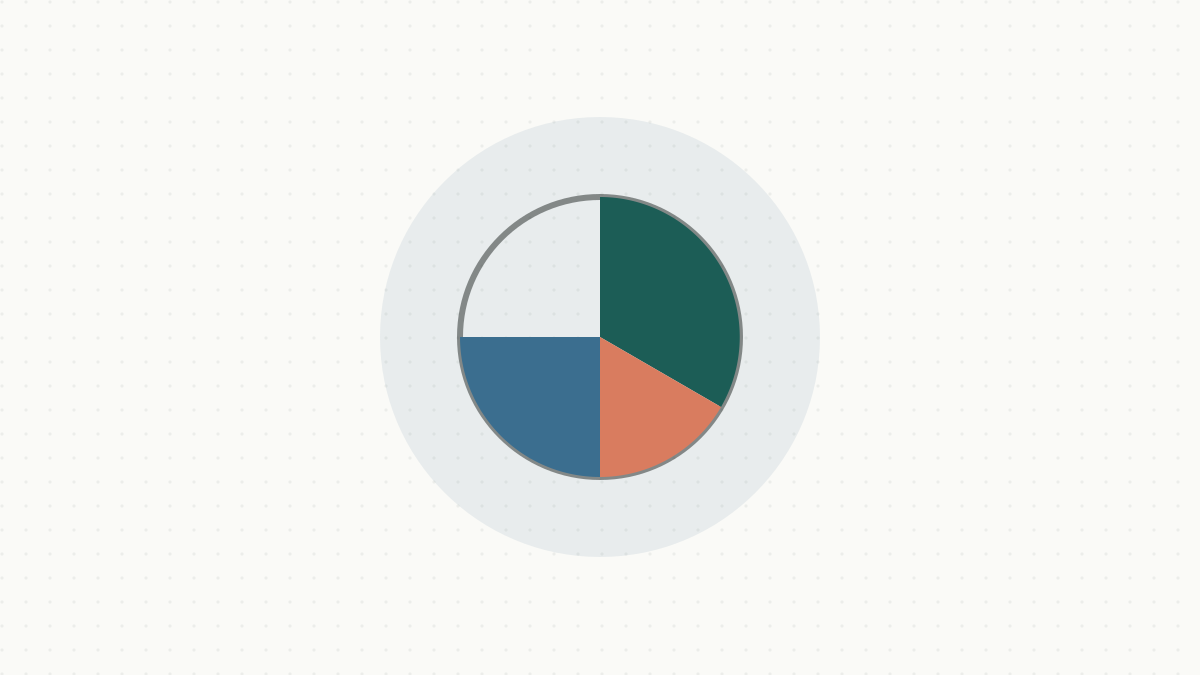
“Eat a balanced diet” is some of the most commonly repeated health advice there is, and also some of the vaguest. It’s worth translating it into something more concrete — not a diet plan, just a clearer picture of what the proportions on an ordinary plate are actually meant to look like, based on the UK’s official guidance rather than whichever eating trend happens to be popular this year.
The basic shape of it
The UK’s Eatwell Guide, the government and NHS’s model for healthy eating, breaks an everyday diet down into proportions rather than strict rules. Fruit and vegetables should make up just over a third of what you eat, with a specific target of at least 5 portions a day — a portion being roughly 80g of fresh, canned, or frozen fruit or veg. Starchy foods (bread, rice, potatoes, pasta) make up a similarly large share, ideally wholegrain or wholemeal varieties where practical, rather than the refined versions.
Protein and dairy: more variety than people expect
The guidance on protein is broader than “eat meat” — beans, pulses, fish, eggs, and meat are all grouped together, with a specific nudge toward oily fish: at least 2 portions of fish a week, including 1 portion of oily fish, which covers sources like salmon, mackerel, and sardines. Red meat specifically gets a recommended limit — around 3 portions a week, roughly 350 to 500g of cooked meat — which is a genuinely useful, specific number in guidance that’s otherwise mostly about proportions rather than caps. Dairy or fortified alternatives are also part of the everyday picture, with lower-fat and lower-sugar versions preferred where they’re a realistic swap.
Fats and the “less often, smaller amounts” category
All fats are calorie-dense, which is part of why the guidance is simply to favour unsaturated oils and spreads and use them in small amounts, rather than eliminating fat as a category. Foods and drinks high in fat, salt, and sugar are the one category explicitly framed as “have these less often and in smaller amounts” — not banned, just not the default.
Fluids matter more than they get credit for
It’s easy to think of a balanced diet purely in terms of food, but the same guidance includes fluids directly: aiming for around 6 to 8 glasses a day, which can include tap and bottled water, tea, coffee, and fruit juice. Under-hydration doesn’t get discussed as often as food choices, but it’s built into the same official picture of what balanced everyday eating actually includes.
Why proportions matter more than perfect meals
The genuinely useful thing about thinking in proportions rather than rules is that no single meal has to be perfectly balanced on its own — what matters is the pattern across a day or a week, which is a far more realistic standard for how people actually eat. A day where lunch is mostly starchy and dinner is vegetable-heavy can balance out just as well as a day where every single meal is individually “balanced,” and thinking in the shorter, stricter way tends to make healthy eating feel more demanding than the actual guidance requires.
What this means in practice
None of this requires tracking, weighing food, or following a specific plan — it’s closer to a rough mental picture: vegetables and fruit taking up a genuinely large share of the plate, starchy carbs (ideally wholegrain) making up a similar share, a portion of protein, some dairy, and treating higher-fat, higher-sugar foods as the occasional rather than default choice. Building more everyday movement in alongside this tends to matter as much as any specific food choice for overall everyday health, rather than diet and activity being separate concerns.
When it’s worth professional advice instead
This is general guidance for people without specific dietary needs. If you have a diagnosed health condition that affects diet — diabetes, coeliac disease, a heart condition, or similar — or you’re pregnant, breastfeeding, or considering a significant change to how you eat, that’s a conversation worth having with a GP, registered dietitian, or other qualified professional rather than general guidance like this alone.
The honest summary
A balanced everyday diet, by the UK’s own official guidance, is less restrictive and less complicated than most popular diet advice suggests — it’s a set of proportions to aim for over time, not a list of foods to eliminate. That’s a less exciting message than most nutrition content offers, but it’s the one the actual guidance supports.